
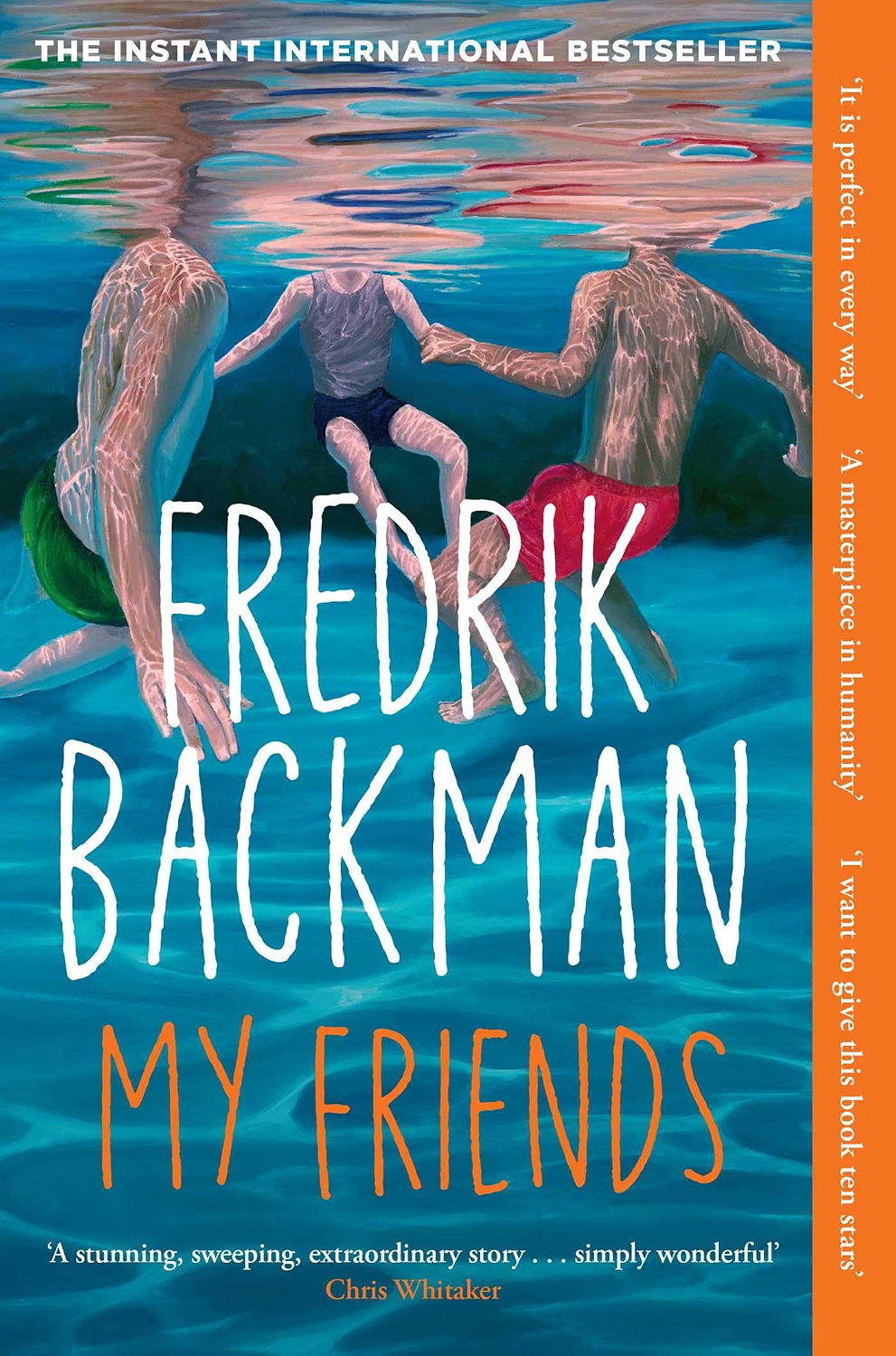

My Friends
‘For some readers, it will be Backman's style of writing that will make the difference’
My Friends by Fredrik Backman begins with chaos, grief and a girl who is angry enough to vandalize an art auction with spray paint in her bag, and somehow from there it becomes tender, funny, and quietly devastating. The genius of the book is that it's not actually all about the painting at its centre. It's about the people that are in it, the people that others don't see and how friendship can be the only thing that keeps someone alive. What might have been a sentimental story is made real by Backman. He writes about damaged people, and cares for them so much that even the strangest moments feel true.
Louisa is the present-day novel's central figure: an eighteen-year-old girl who's now adrift from foster care and laced with the weight of a loss, the only friend she ever had. The novel then unfolds into a second story, set twenty-five years earlier, in which we meet the boys on the pier, and the summer that shaped everything, when she finds herself connected to a famous painting, ‘The One of the Sea.’ That's a good structure to have since it allows the book to shift between mystery and emotion. You want to know who these friends were, what happened to them and why this painting is so important to Louisa. The journey that follows is not a quick and plotty path in the traditional sense, but it's one that continues to grow as the story continues to get more emotional.
I can't rate this book any higher than 5 out of 5 stars, because I think what Backman really does well here is demonstrate how friendship can be a form of survival. The boys in the past are not idealised. They are funny and reckless, and loyal, but they are also children who carry fear, poverty, violence, loneliness. Throughout the novel, the theme of some young people not having safe homes and creating safety within themselves is repeated. That lands hard. It's reinforced by the small details, such as how ‘Tomorrow’ is a promise between friends, or how Louisa sees more in the painting than the surrounding adults. It is of great value to them. To her, it's evidence that someone once saw love and laughter so clearly that they saved it.
For some readers, it will be Backman's style of writing that will make the difference. He has a very distinctive style, with comments, observations, repeated ideas and lines that can move rapidly from the humorous to the painful. Sometimes the book circles around a thought before taking the next step, and if you're looking for a straightforward plot, the beginning is a bit loose. However, after the voices have died down, that style is one of the strengths of the book. It enables him to be witty and sincere. It also provides him with space to write lasting lines. The chapters on grief, memory and art are particularly good; the humour prevents the novel descending into the depths of its sadness.
In the end, My Friends is less about what happens than about what remains. It's about the imprint that people make on each other, despite death, distance or time. It's sad in places and some of the themes are dark, but it's never despairing. This is what makes it memorable. It believes in the power of friendship, the power of art and the power of being truly seen to change a life. This is a novel that is more than heart, pain, humour and a sense of human messiness.
From our readers
Reader Insights
Keep exploring
Similar reviews to explore
Verity
The ending is where readers are most likely to disagree. I was glad that the book did not...
Denied Access
This is an exuberant, essential conclusion to Mitch Rapp's first years - a relentless thriller...
The Housemaid
My friends couldn’t stop talking about Frieda McFadden’s The Housemaid, and after reading this...